
Last Updated on June 23, 2026 by Jade and Deeshen
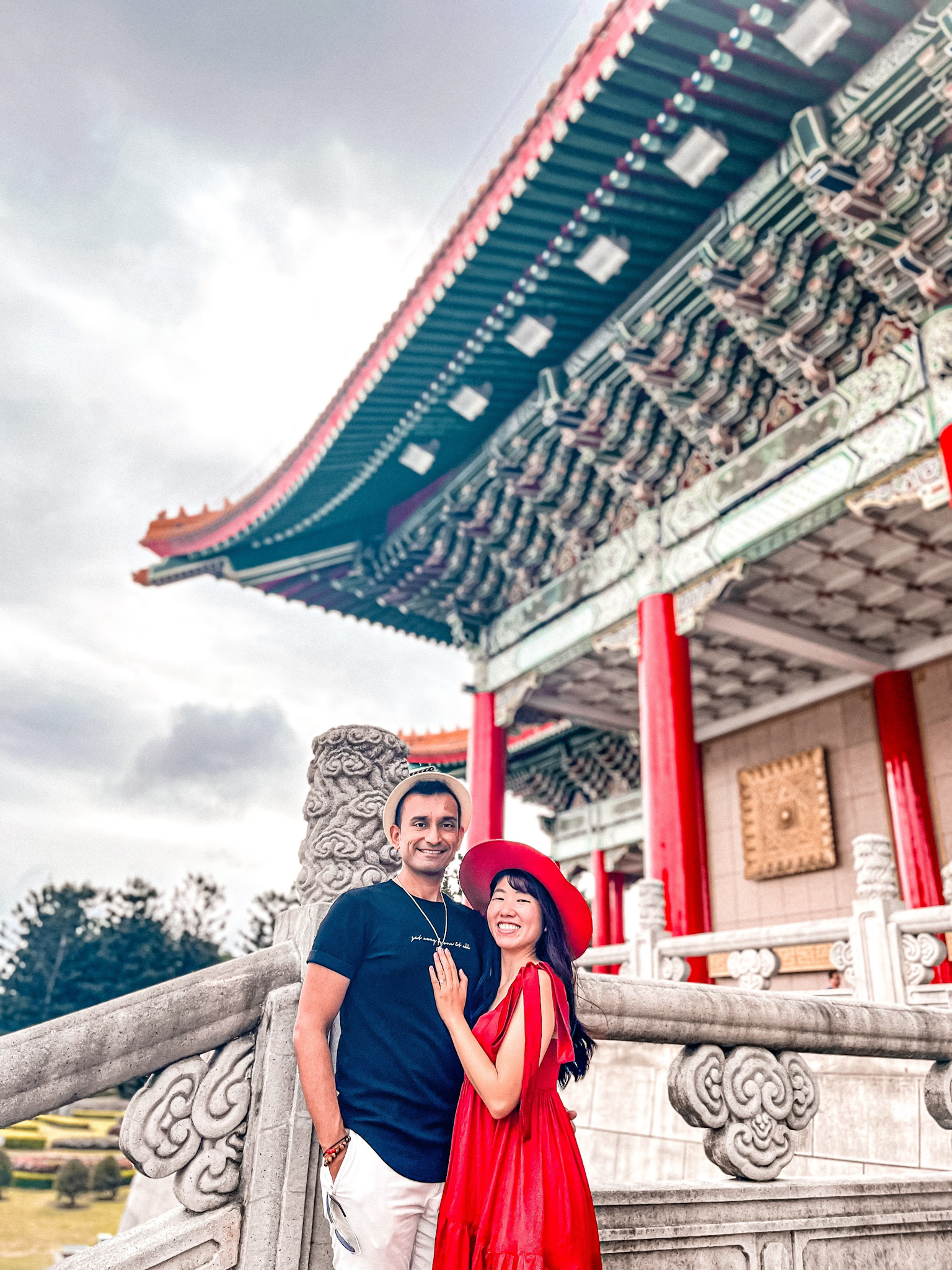
A year ago, my husband Deeshen and I went to Taiwan with the intention of deepening our Qigong, and meeting a Qigong master and a tea master.
Both came true.
We had a flexible plan and a sincere hope to meet a Qigong master to deepen our Qigong journey.
As Qigong teachers and writers in Hawaiʻi, USA, we are humble students of mother nature and the Tao.
Somewhere within us, there was a pull—to go deeper, to learn from the source and a teacher in the east, where Qigong and tea arts originated.
A few weeks before our trip, the Director of Taipei Economic and Cultural Representative Office (TECRO) in the Washington DC, United States recommended that we meet with Meimen Culture Foundation 梅門養生文創 and Master Lee Feng San 李鳳山師父 in Taiwan.
We reached out. No word back.
So we landed in Taipei and continued to flow with positive expectation but no attachment.
What unfolded over the next two weeks deepened our understanding of the Tao, Qigong, service, and nature in ways beyond words.
8 Meimen Lessons from Master Lee Feng San & Ping Shuai Gong
The lessons continue to ripple through our lives, and over the next two articles, we’ll attempt to share the learnings.
We truly hope to share our gratitude, amplify their light, mission, and hope these learnings can inspire others.
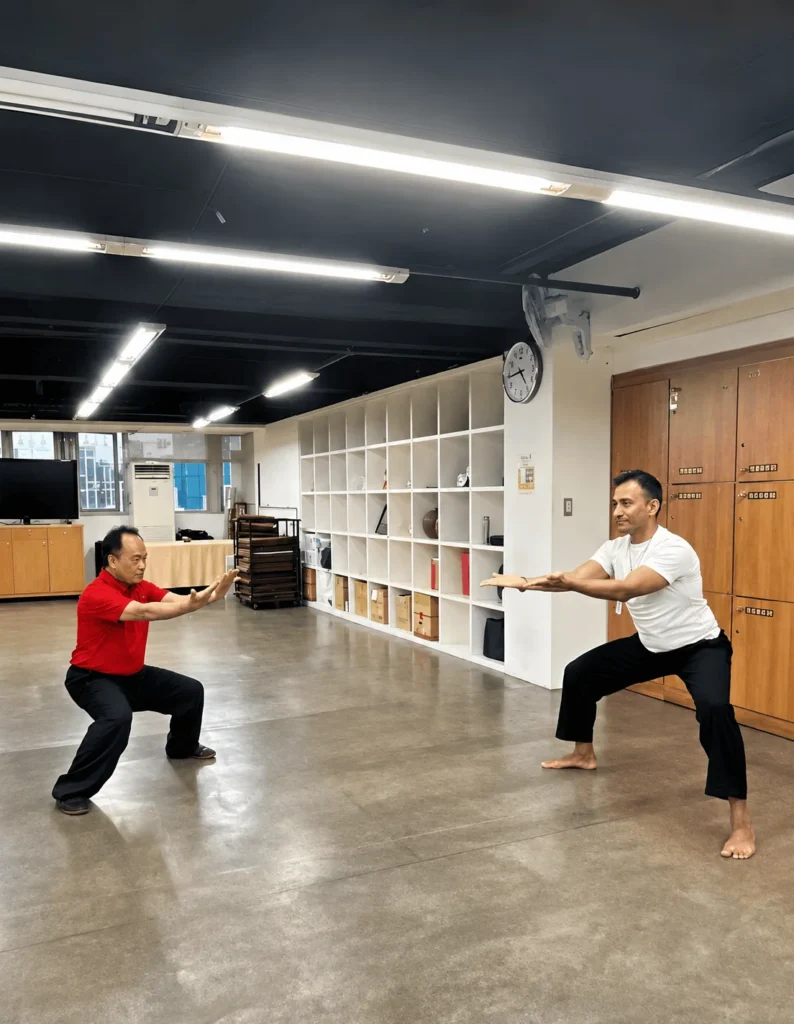
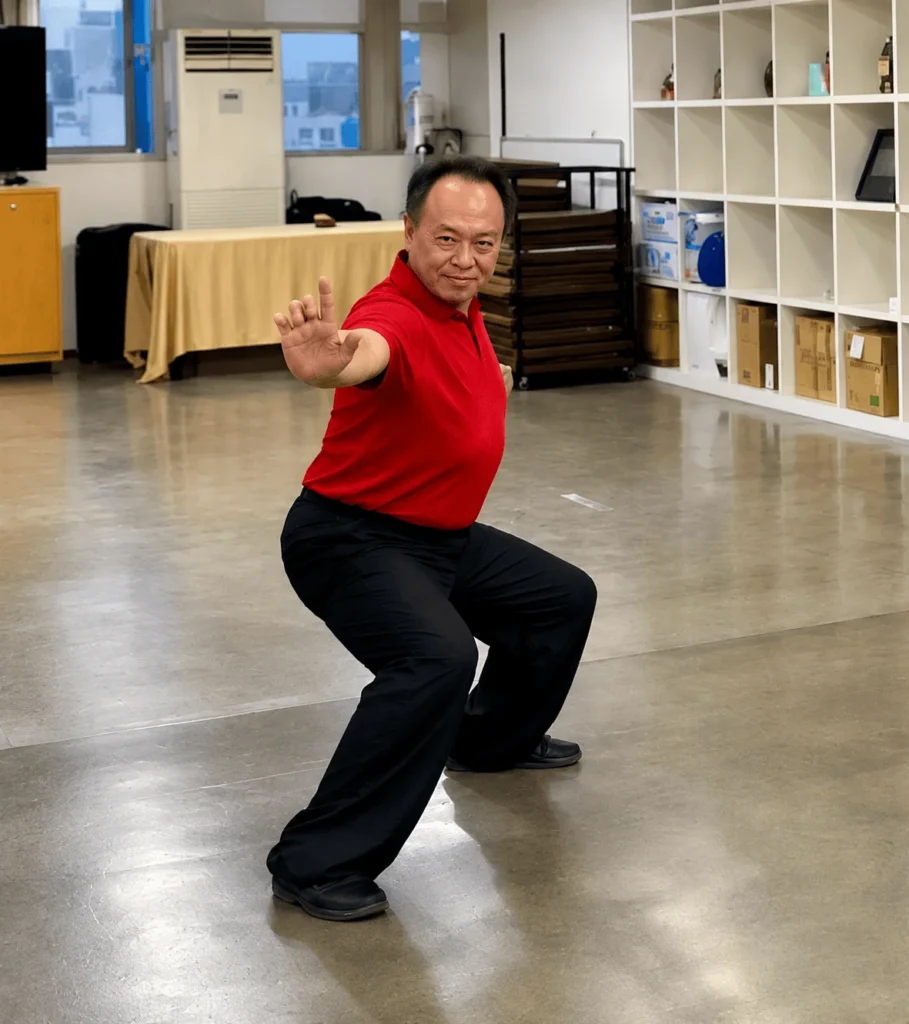
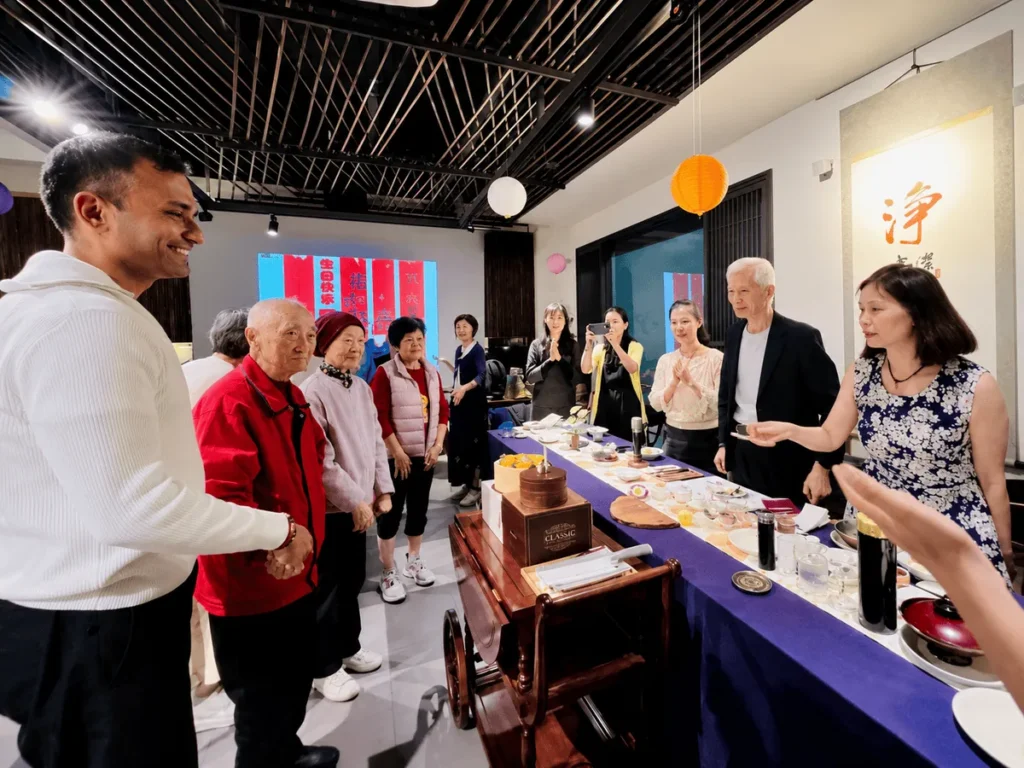
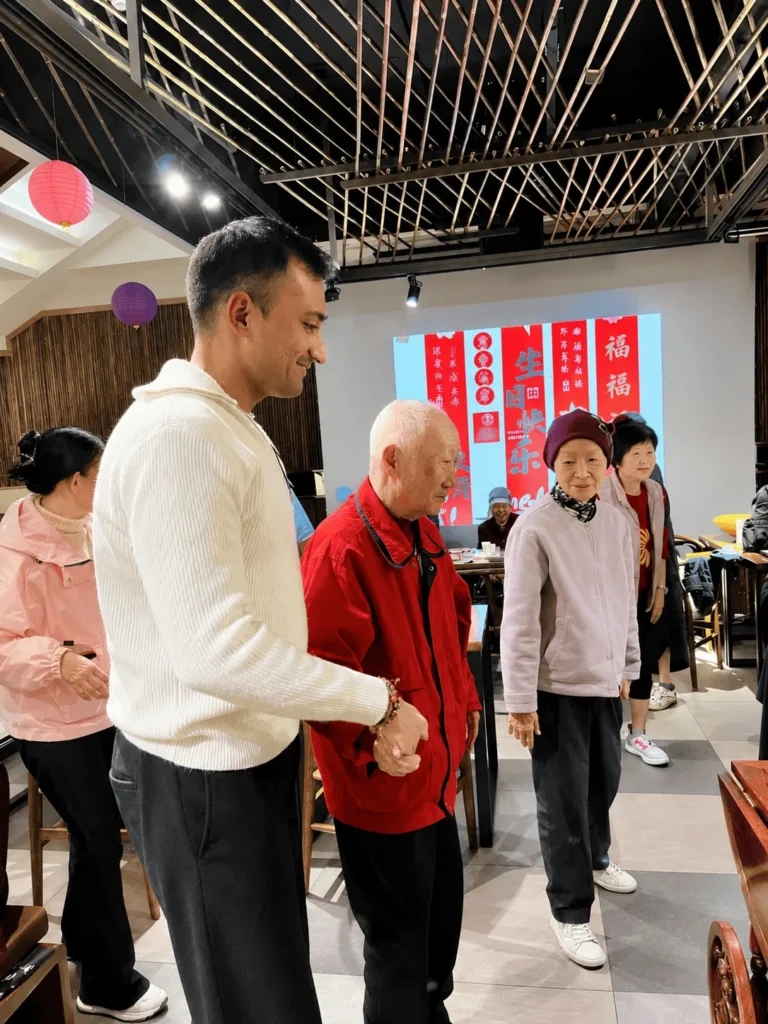
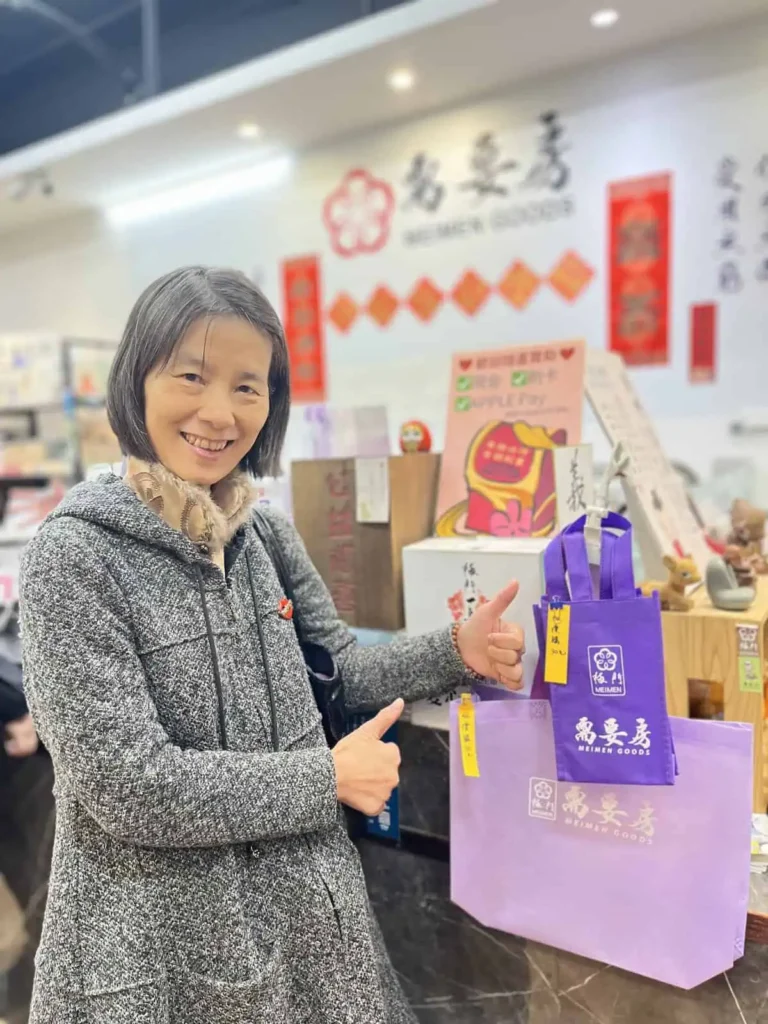
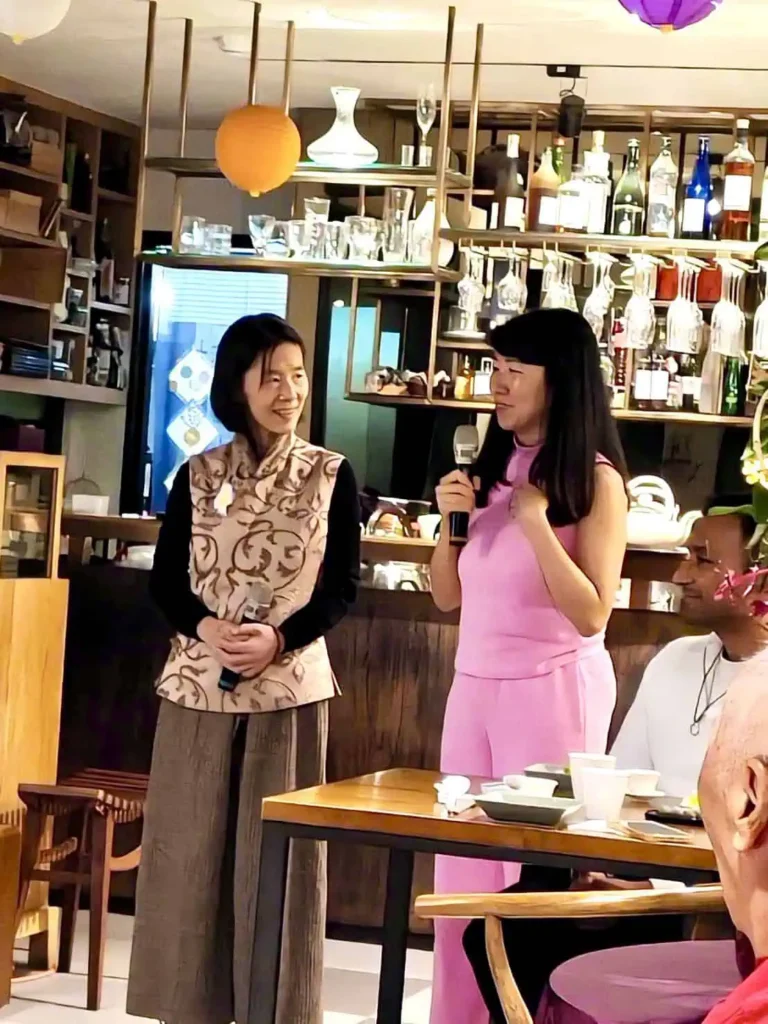
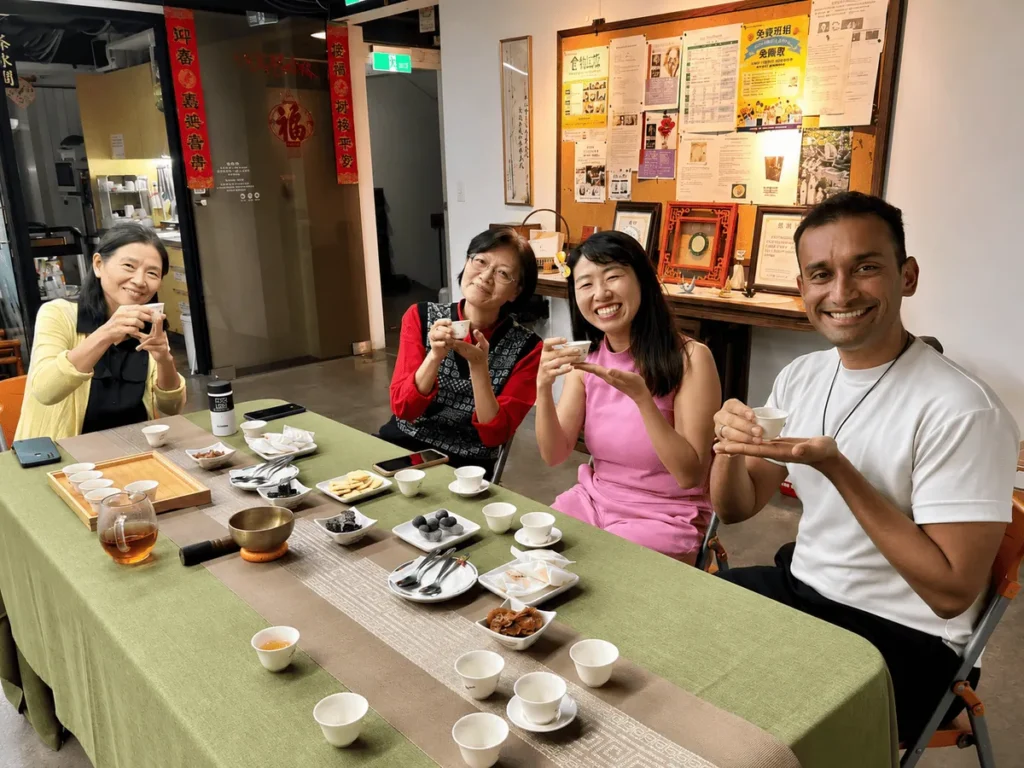
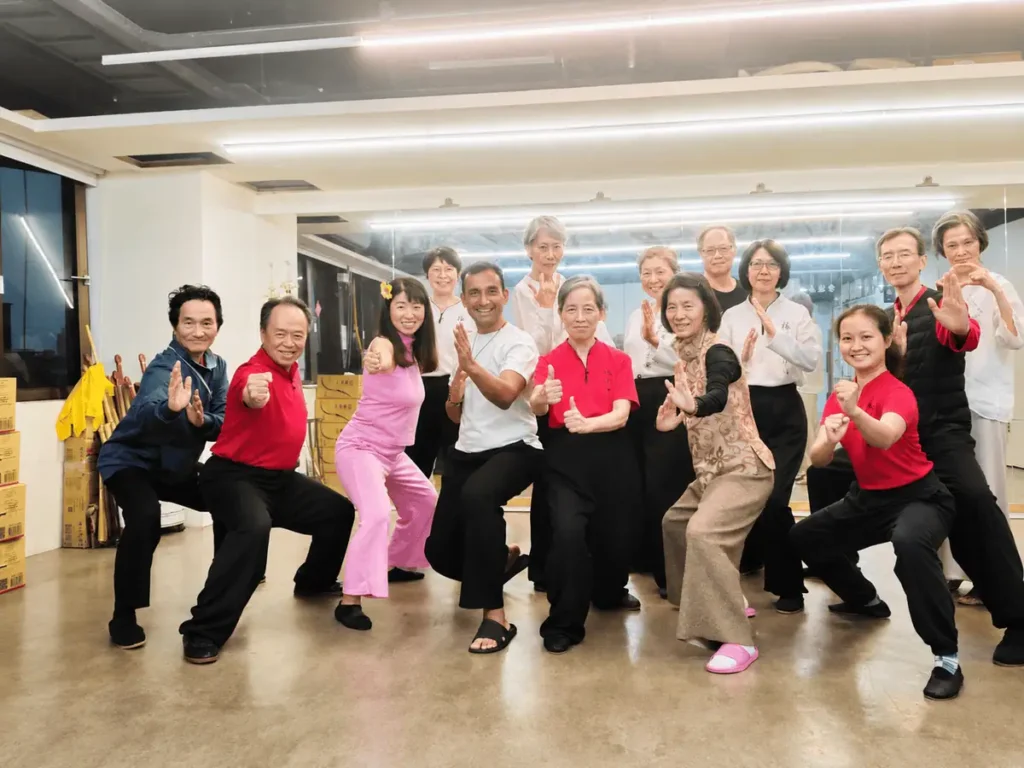
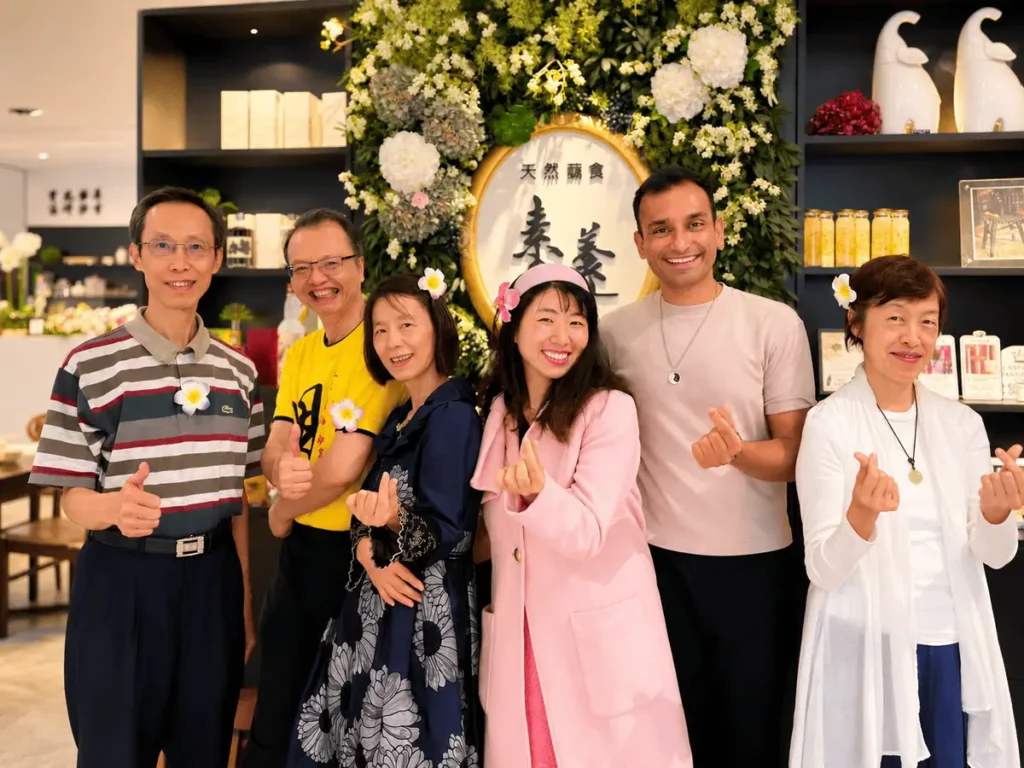
Three days before leaving Taipei, a message came through. A Meimen representative reached out on WhatsApp with the phone number I provided.
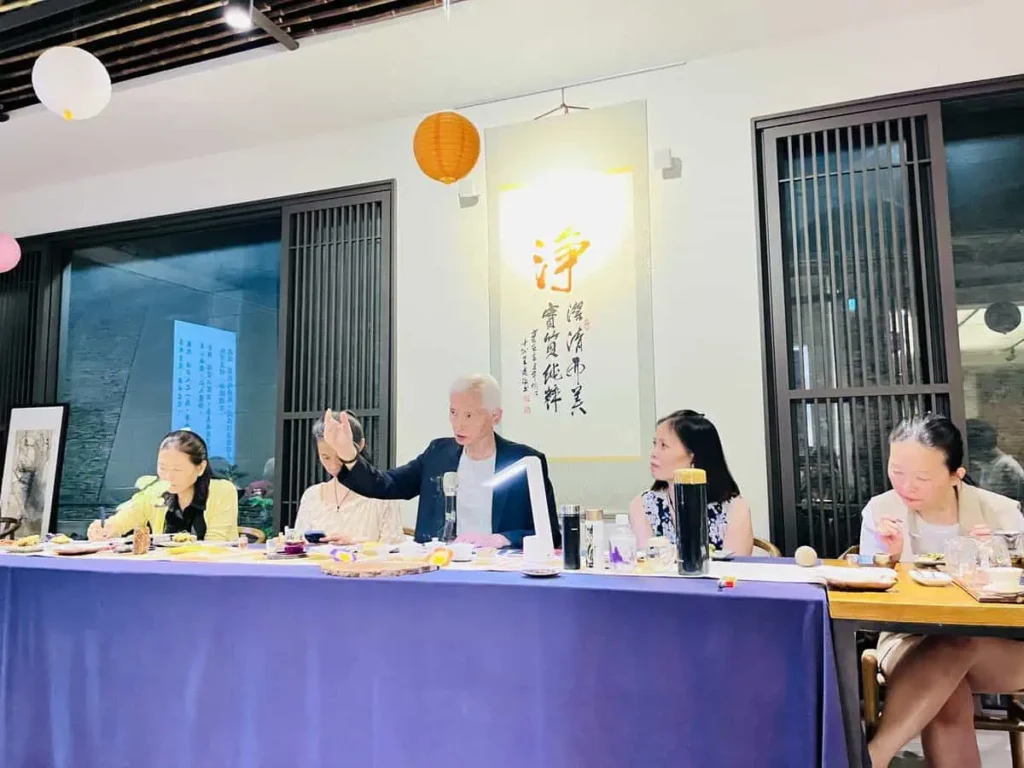
Within an hour, we were invited to meet that very evening for dinner at Meimen vegetarian restaurant to meet Meimen brothers and sisters.
Just like that.
A path opened.
Our hearts were wide open, with no expectation of what was to occur.
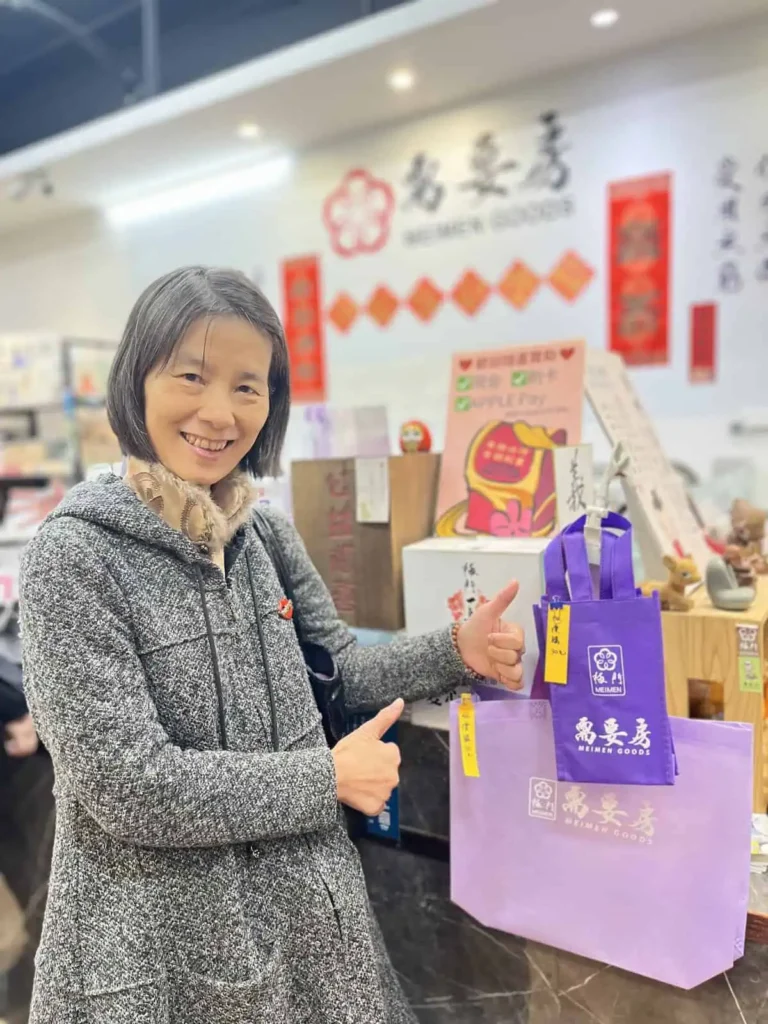
When we arrived at the restaurant, we were welcomed by Ms. Snow, Mr. David, and a few exceptional Meimen teachers, who we later learned were all students of Master Lee (Shifu).
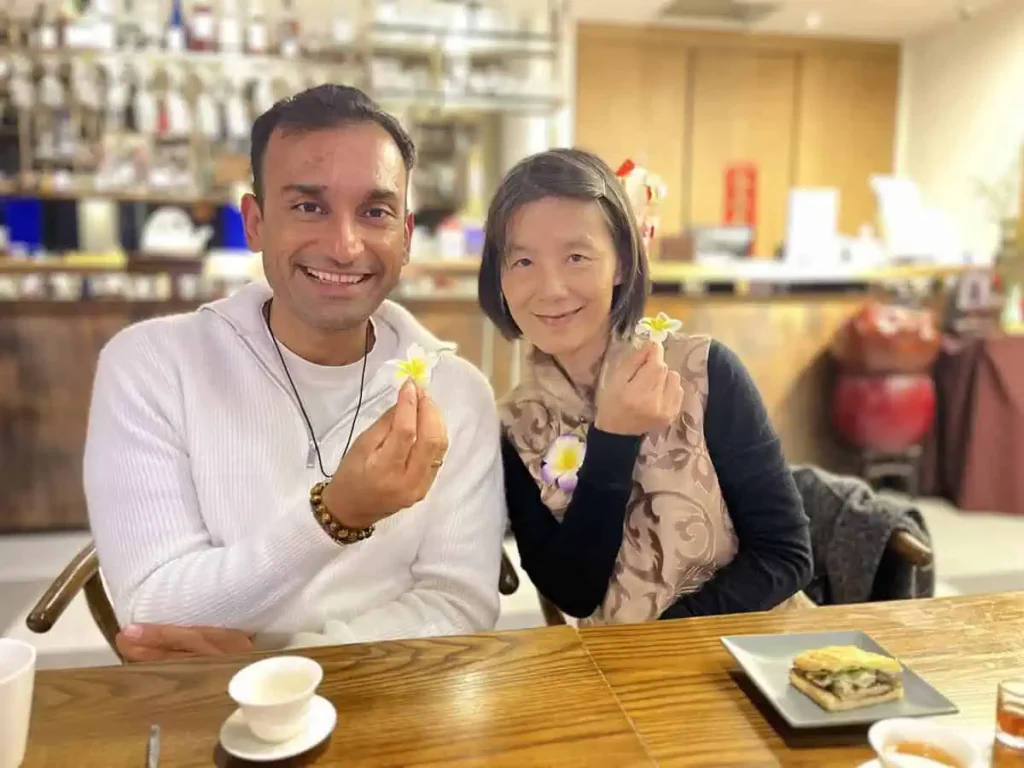
We greeted each other with warmth, honor, and presence.
We sat down, ordered food, and Ms. Snow (CEO of Meimen) and Mr David warmly welcomed us—offering a few pamphlets on Master Lee Feng San before asking, “What questions do you have that I can help answer?”
Over the next few hours Ms Snow so beautifully transmitted learnings from Master Lee Feng San — and the days that followed — what unfolded felt like stepping into a living, breathing Tao community.
In our next two articles, I’ll share what my husband, Deeshen, and I learned—what we reflected on, and the guidance we felt called to integrate into our lives.
Even now, these lessons continue to unfold… deepening with time, experience, and presence.
1. To Learn from a Teacher, You Must First Arrive as a Student
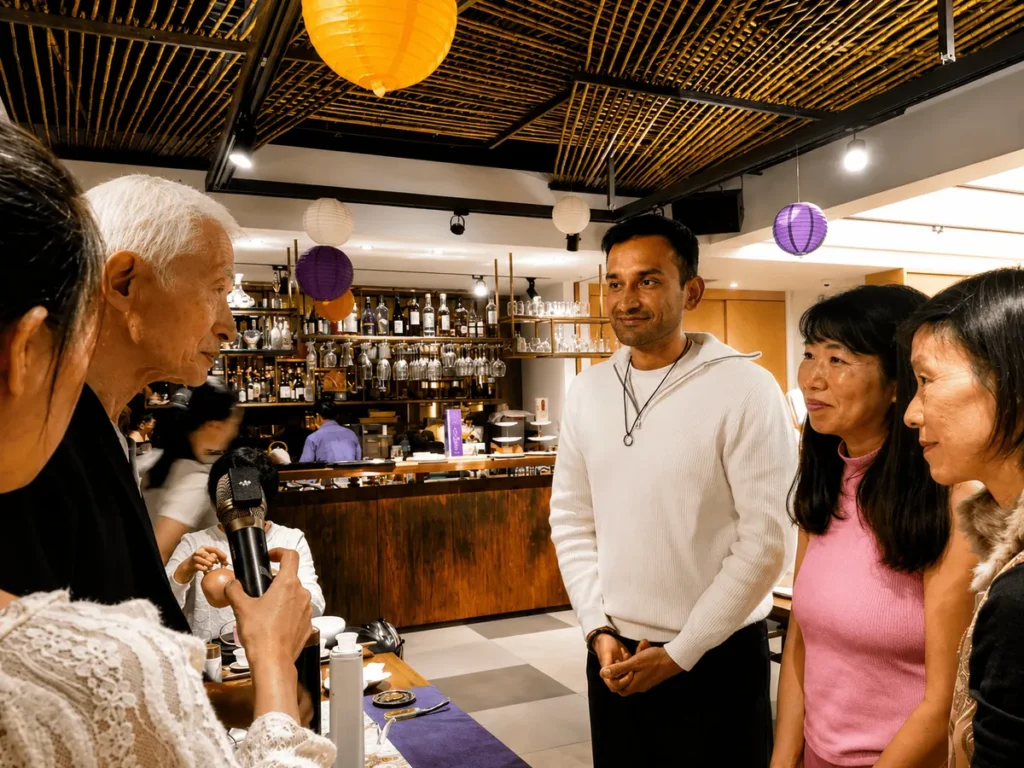
As ardent students of nature, we understood early on that the greatest teachers are also the greatest students.
Over dinner with Ms Snow and the fellow teachers (Lee Feng San Shifu’s students), something in us naturally shifted.
We came as students.
Ms. Snow shared that she had practiced Qigong for 27 years and had followed Master Lee Feng San for over two decades—faithfully serving alongside him, together with her brothers and sisters, in deep devotion to the community.
In the Qigong and martial arts traditions of the East, they call one another brothers and sisters.
She introduced us to each Meimen teacher—not by title, but as fellow practitioners and students walking the path.
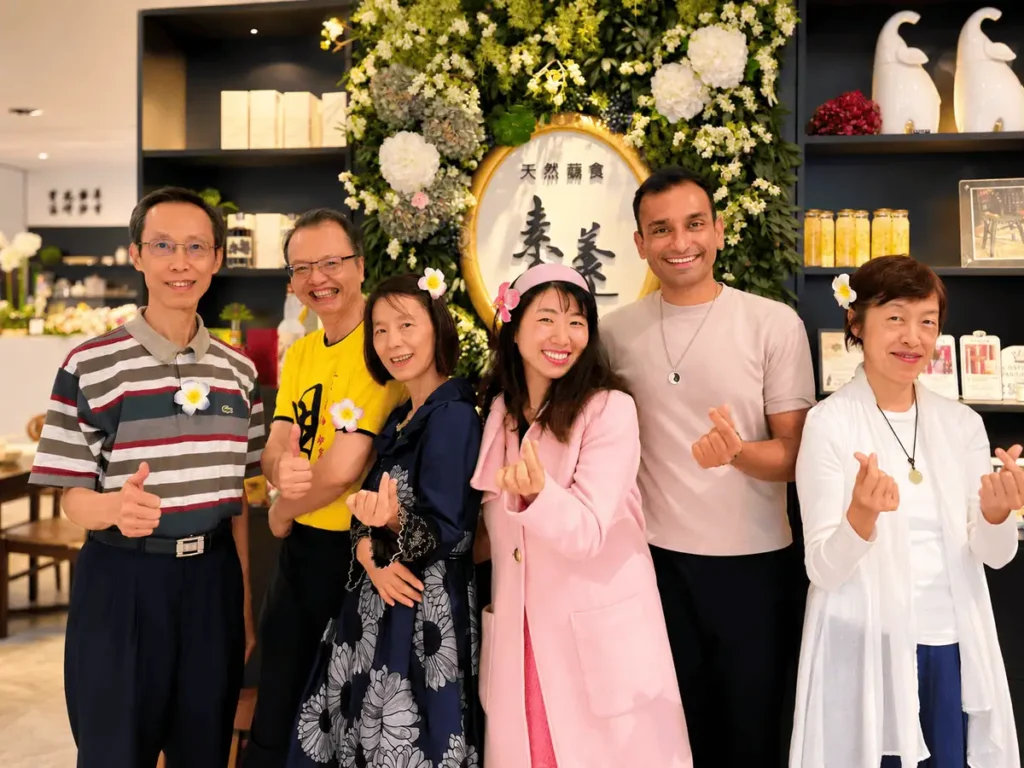
And it became clear.
The Tao does not reveal itself to those who come full of themselves.
It reveals itself to those who are willing to receive and serve with a humble and grateful heart.
A cup that is already full cannot be filled.
Only when you empty it can you receive.
If you already believe you know everything, nothing new can enter.
To truly learn, you must arrive as a student—
again and again. There is no sense of “I know.”
Only a quiet humility, and a heart of joy to receive, see light and become a mirror to it.
2. When You Understand One Thing, You Understand Everything
We studied the Tao Te Ching, the timeless classic attributed to the sage Lao Tzu, an older contemporary of Confucius.
Composed of 81 short, poetic chapters, it offers a profound guide to living in harmony with the natural flow of life.
We reflected on its verses over years, and practiced Qigong through its philosophy—through nature itself.
But something shifted when Ms. Snow, a living breathing teacher in this modern time, shared this simple phrase:
“You understand one thing, you understand one thousand things.”
In Chinese, the saying goes 一通百通 (yī tōng bǎi tōng)
And as she spoke… electricity and water moved through me.
It felt like a current—quiet, fluid, yet unmistakably alive—flowing through my body.
And deeply certain…
It was as if something I had already known was being spoken back to me.
Not as an idea, but as a lived truth.
It gave words to what we had been learning from nature and the Tao through direct experience that the great teachers are everywhere.
In a grain of sand.
In the rhythm of the ocean.
In the groundedness of a mountain.
In the cycle of water from clouds to the rivers to the ocean.
Every being you encounter—from a single leaf, to the sun above, to each person who crosses your path—carries light.
Carries a reflection of the whole.
In the months after, something became clear.
If you observe yourself through one movement through regular practice…
one breath…
one cycle in nature…
You begin to see it everywhere.
The way a leaf unfurls is not separate from the way we grow.
The way the tides rise and fall is not separate from our own inner rhythms.
The way the seasons change is not separate from the transformations within our lives.
The Tao is not something outside of us, or hidden in distant places.
It is the pattern moving through everything.
And when you truly understand one part of the universe—
not intellectually, but through presence, through embodiment—
you begin to understand the whole.
Not because you have learned more…
but because you have begun to see.
This phrase continues to reverberate, even with our Qigong and Tea pratice.
I realized that through one single practice daily, by understanding nature, water and tea deeply, it helped us understand one thousand other things more consciously.
3. Master Lee Feng San – Be Not Attached to Time, Space, or Routine
We asked Ms. Snow what one of the most impactful lessons she had learned from Master Lee Feng San was.
She paused, then said simply,
“Master Lee taught me to break the bond with time.”
“People run after time.
Don’t set limits of time on yourself.
Every moment is eternal.
Break the bond with time.
Break the concept of time.
Time is eternal, don’t chase time.”
What Ms. Snow shared with us was simple… and yet profound, it stayed with us in a way that is still unfolding.
Through time… she completely embodied this principle.
And we observed it fully.
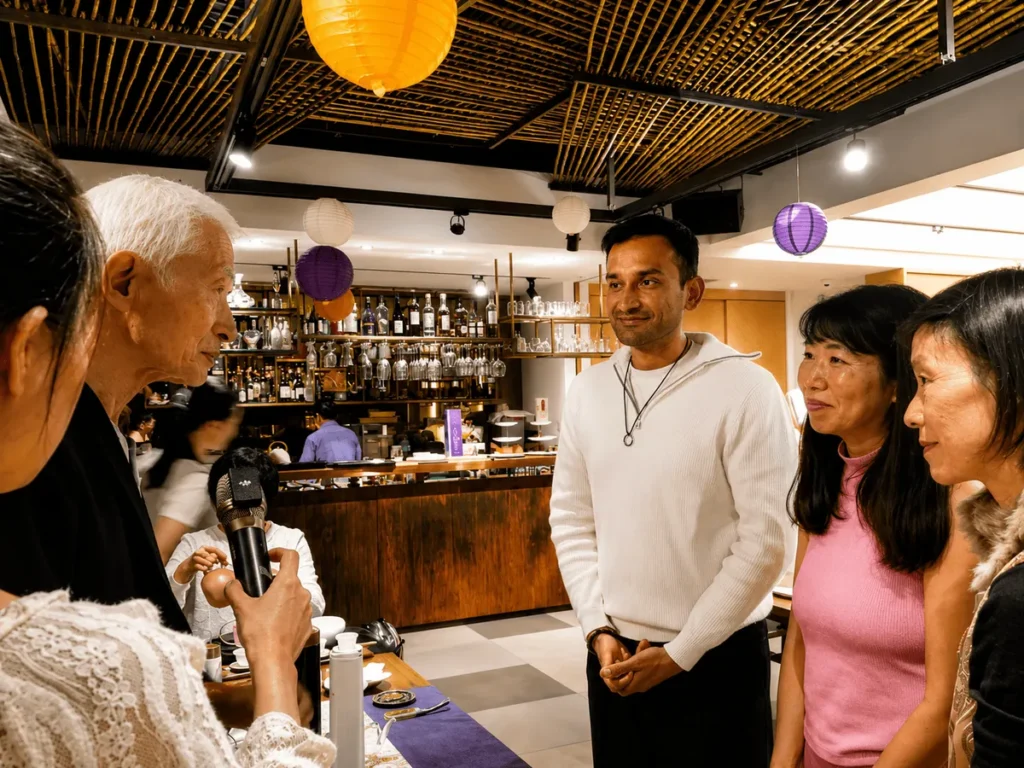
That first evening, Ms Snow hosted us for dinner and conversation until 10:00 pm.
Later that evening, Master Lee had a spontaneous impulse to go watch a movie at 1am in the morning and invited all the disciples —and the disciples went, joyfully.
The next evening, she hosted us again.
With complete presence.
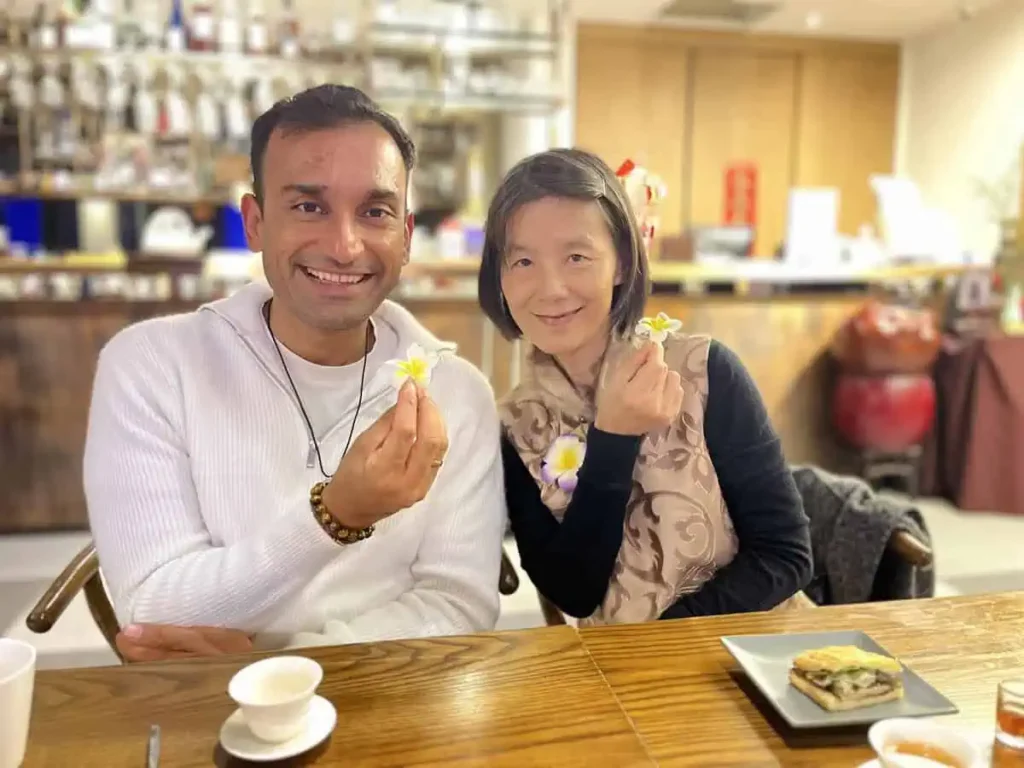
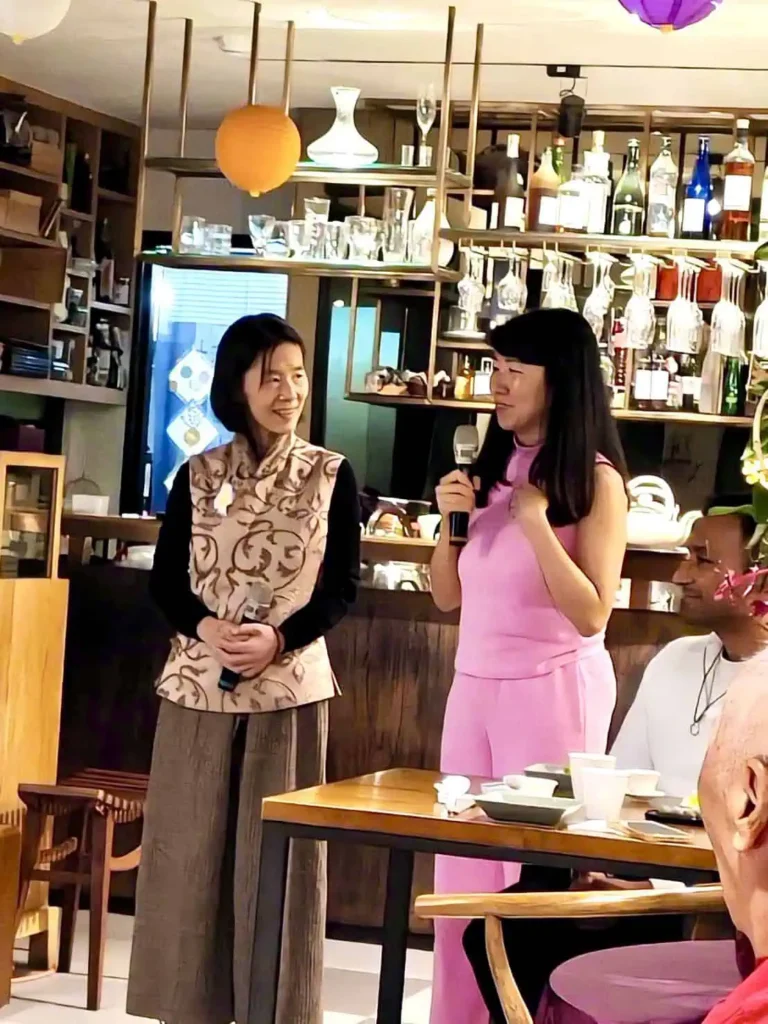
At some point on the 2nd evening, we learned she had only slept two hours the night before—sitting upright on a chair.
And yet…
Not once did I see her yawn.
Not once did her energy drop.
Not once did her presence waver.
She was ever bit a gracious host.
Sharing the philosophy of Meimen and translating the wisdom of Master Lee Feng San.

She wasn’t tired. She was fully present sharing Lee Feng San Shifu’s love and wisdom.
Before we parted ways that evening, I shared this observation with her—how I had observed her deep presence.
How not once did I see her yawn and that we witnessed she truly broke the bond with time.
She paused, almost surprised at the observation, and gave a big sincere smile saying…
“It must be because I was fully present with you two.
It was a joy and an honor to be with you.”
She so effortlessly shared her own learnings of living the way of the Tao and Master Lee’s teachings with us, and for that we are eternally grateful.
Not only was she our host and teacher, she was also our ears and mouth that evening.
She so kindly and gracefully transmitted and translated the learnings that Master Lee shared, and spoke and translated Deeshen and my reflections and gratitudes.
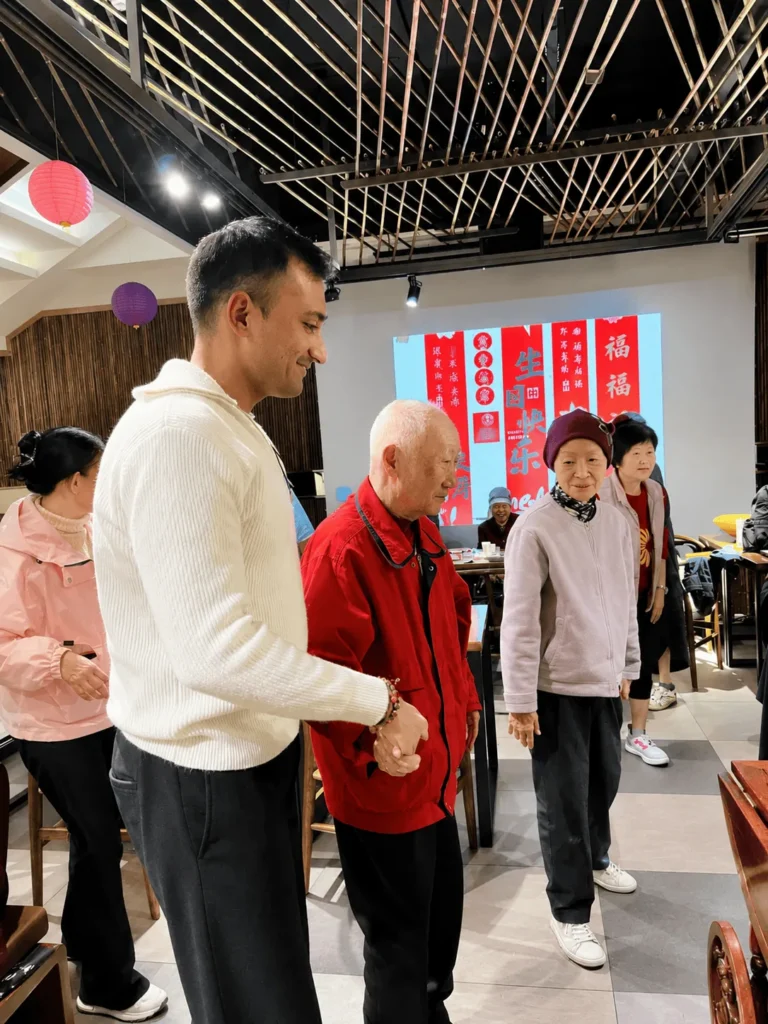
Because we were present, Master Lee had to speak slowly and in parts that evening. The other disciples all said they were grateful as Master Lee usually speaks fast, but that evening, they even got to learn deeper themselves too.
After that evening, I strived to never complain about time ever again.
I understood something beyond words:
She wasn’t managing time.
She had stepped out of being bound by it. Being attached by it.
This is the Tao.
It doesn’t chase time.
It doesn’t rush.
It flows.
And after we left, I noticed something subtle but powerful.
Deeshen—who had always been very disciplined with timing and routine, especially around waking and sleep—began to soften.
The attachment to time… loosened.
Not in a careless way.
But in a freer way.
4. Lee Feng San Shifu on Yuan – Fated Connection, Sacred Connection
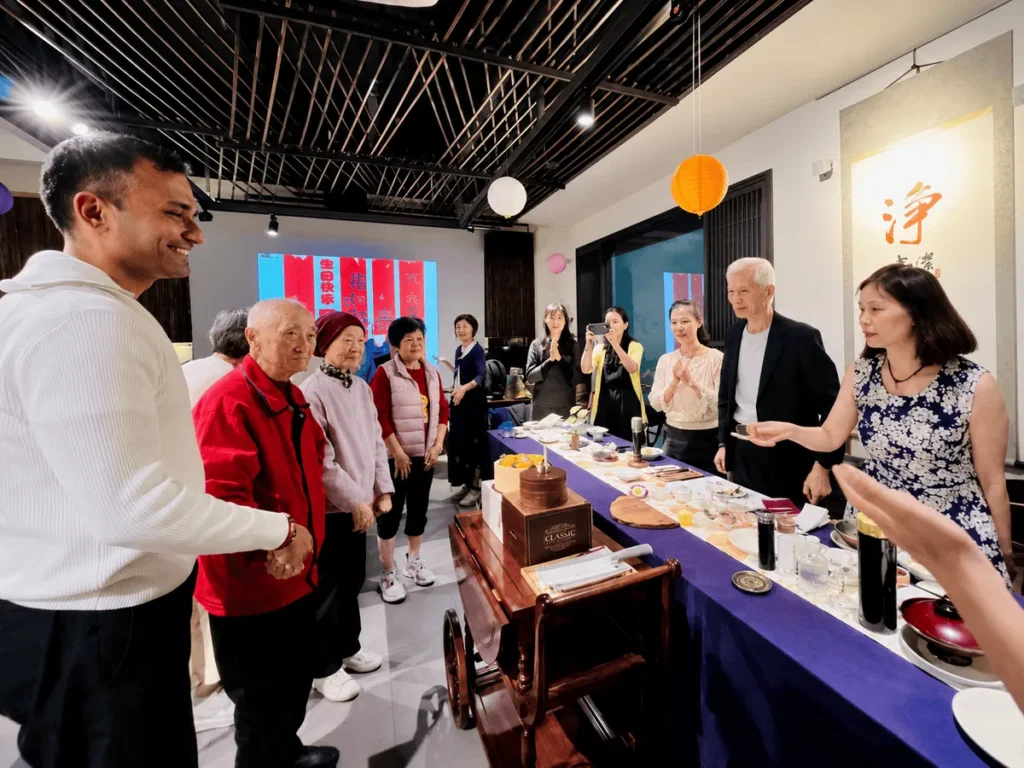
I asked Ms. Snow “How did you know Master Lee was the teacher you wanted to follow?”
She spoke: “When I was young, I was at a cross roads and I had a decision to make.
I knew I didn’t want this (thing).
This (thing) I’m not sure.
But I can take a risk.”
That stayed with Deeshen and I.
Because as human beings, we all feel this at some point in our lives.
There are paths we know are no longer aligned with how our inner being has expanded.
And then there are paths that feel right, energy rising, but unknown or risky.
Maybe for some, it’s something we’re grateful for but we no longer feel a calling towards, and the universe keeps giving you signs to follow a new way of living and serving.
These paths sometimes feel uncertain… yet it sparks curiously, peace, joy.
Can you take a risk?
The Tao doesn’t always show you everything.
Sometimes it simply invites you to take one step forward.
And that one step can change your entire life.
It is always present, just like flowing water, it’s always present right here right now. Yet it’s always forward flowing, forward looking.
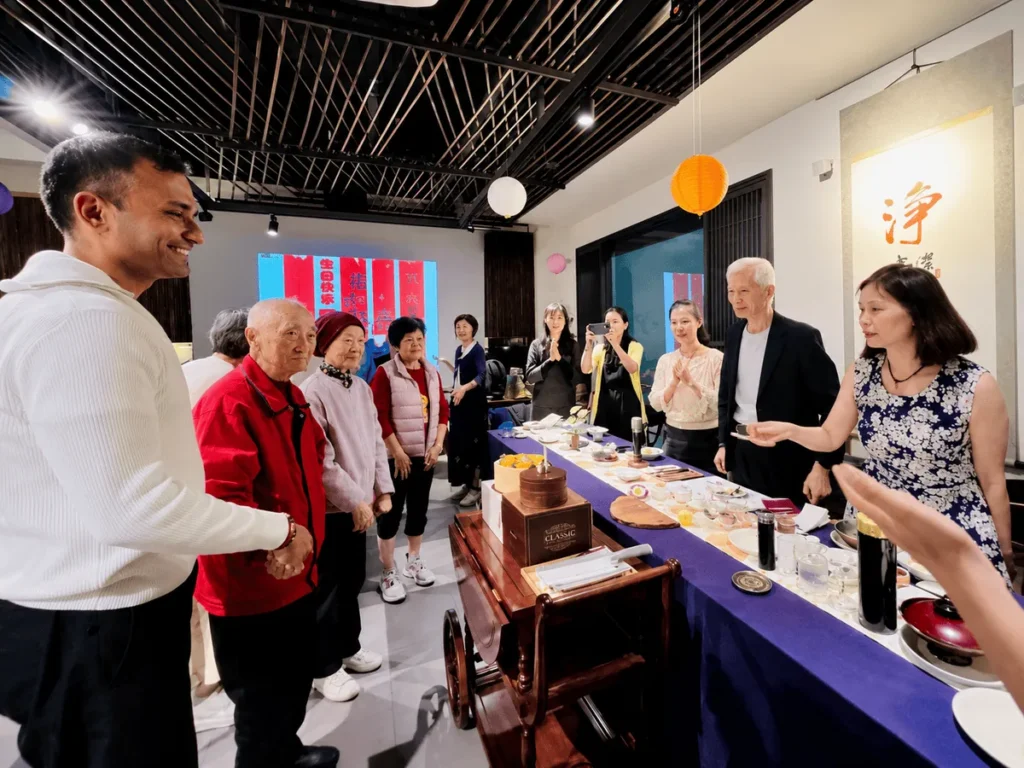
At the end of our second night, we expressed our gratitude.
In a quiet moment, Ms Snow said:
“Our meeting was yuan.”
Yuan (緣) in Chinese translates to “A fated connection.”
Rooted in Buddhist and Daoist thought, Yuán is the invisible thread of fate, synchronicity, or cosmic connection that brings people, a specific moment, and a specific tea together.
Out of all the billions of people in the world, and all the countless paths you could have taken, you are sitting at this exact table, with this specific master, teacher, host, sharing this specific moment.
That is not an accident; it is Yuan.
I have no doubt she was right, it is destiny that we were meant to meet her, Master Lee Feng San, Ms Snow and the Meimen brothers and sisters.
I felt it immediately.
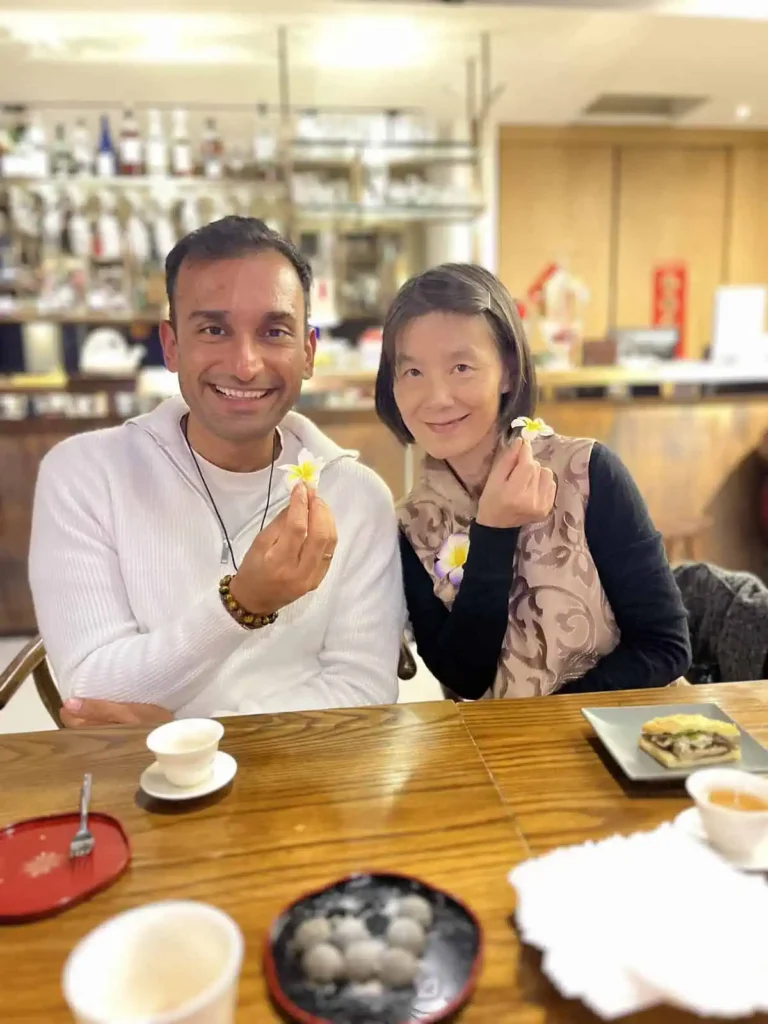
There were many subtle signs that showed a fated connected. One small example, we had brought plumeria flower clips from Hawaii (雞蛋花) to gift to the teachers on the evening of our first meeting.
When we received Master Lee’s pamphlet from Ms Snow, we were surprised there was a photo of Master Lee holding a yellow plumeria flower!
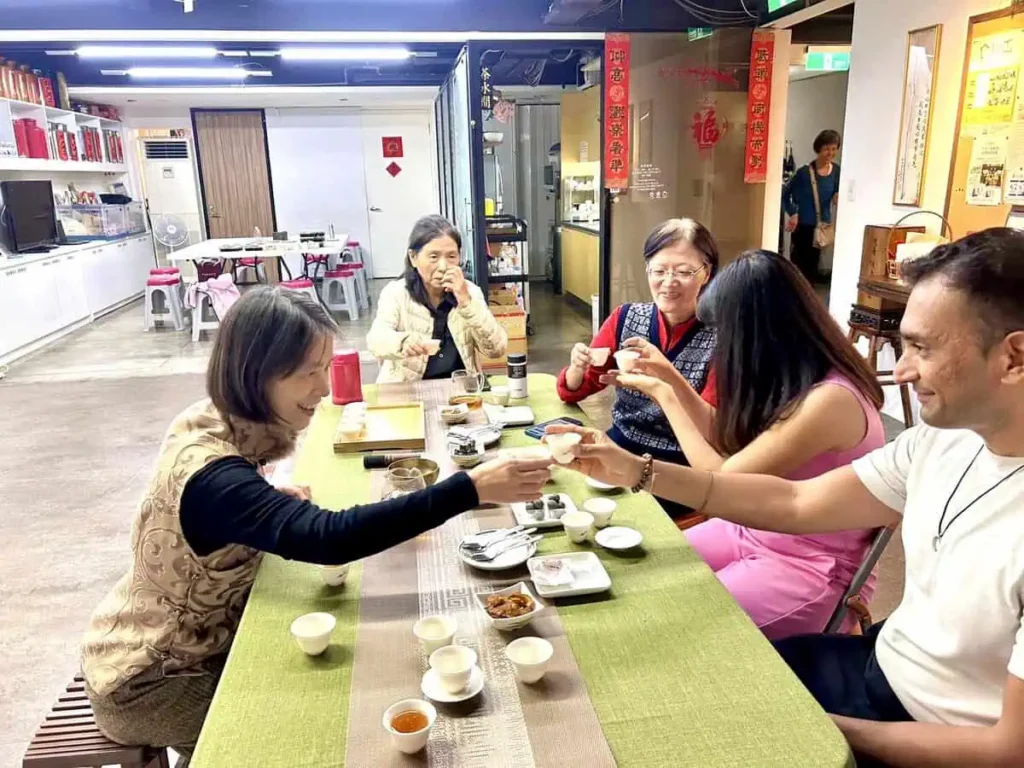
Then when we arrived at the Meimen tea house on our second day, there was a plumeria flower tree blooming right outside. A sign of Yuan from nature.
5. The Ever Layers of True Relaxation
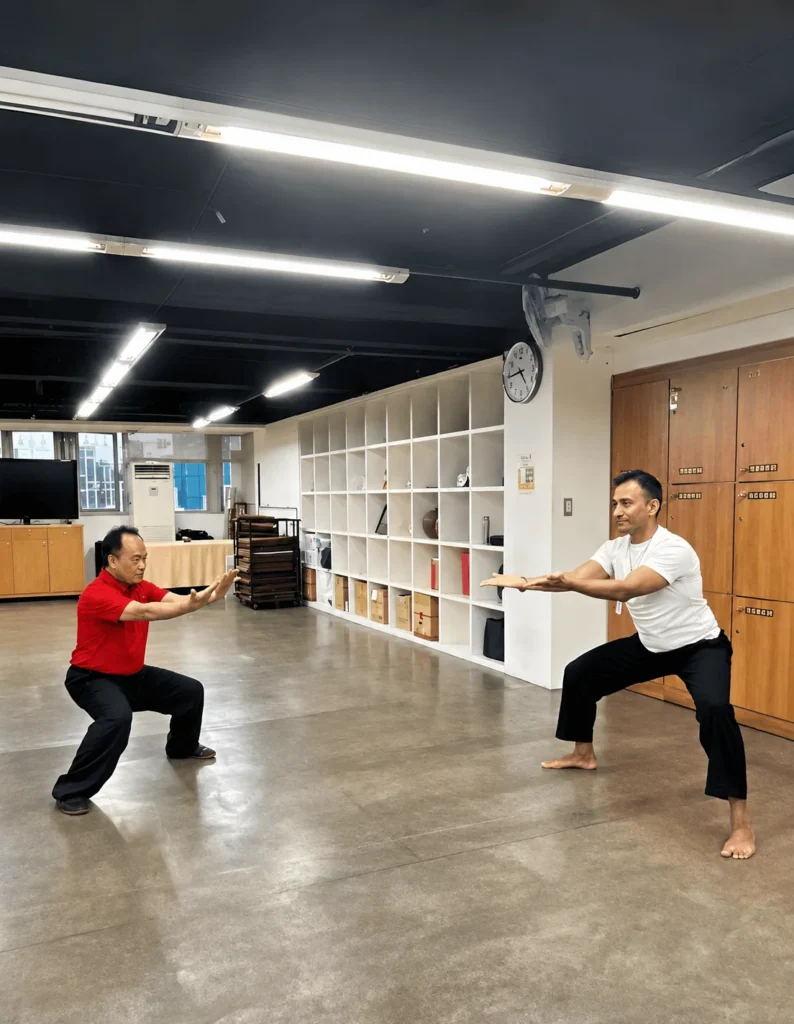
One of the core principles of Qigong is fang song—complete relaxation.
But what we experienced showed us how deep that goes.
A few days prior, an elderly man at Chiang Kai Shek memorial hall had taught us the ever layers of moving like water, and how relaxation is the greatest defense in martial arts.
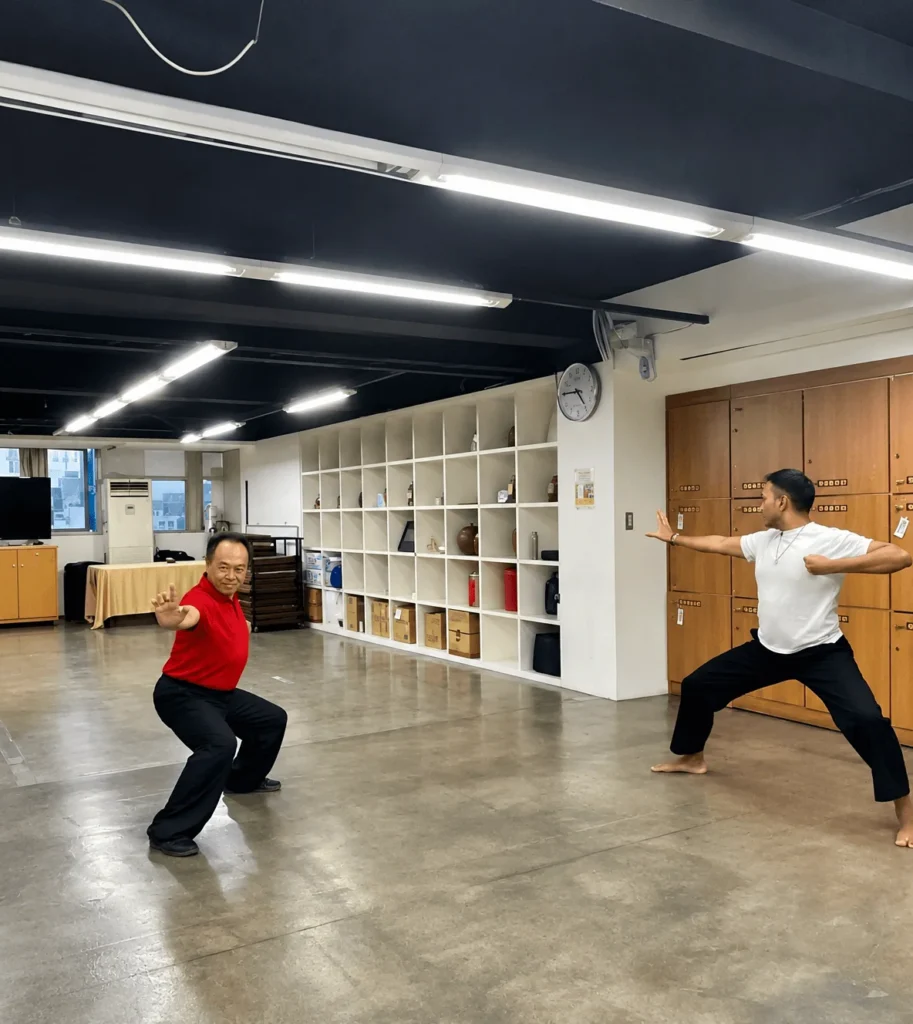
Fast forward to the day where we met at Meimen culture foundation, we met Mr David Shih, a Qigong and martial arts teacher at Meimen.
His smile was so radiant, and his body so full of energy and years of disciplined practice.
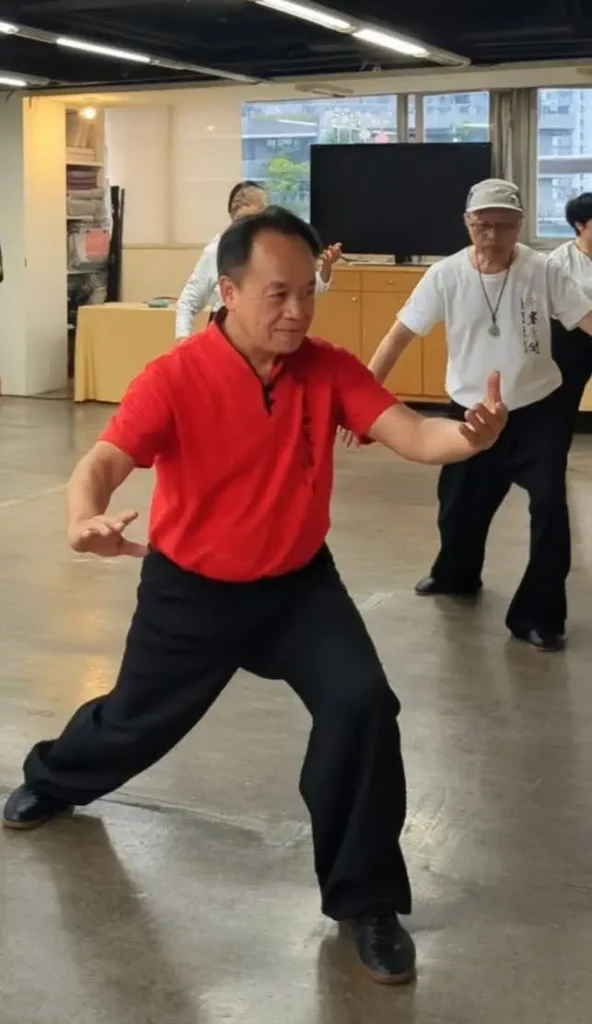
In a demonstration, Mr David asked Deeshen to lift his arm for an exercise, and relax.
Next, he again supported Deeshen’s arm up with his hand… told him to relax, then Mr David removed his hand.
Deeshen arm stayed in the air.
“You’re not fully relaxed,” Mr David said.
“If you were relaxed, your arm would fall down like gravity.”
Such a simple moment.
But it revealed something profound.
Relaxation is not surface-level.
There are ever-deepening layers of relaxation.
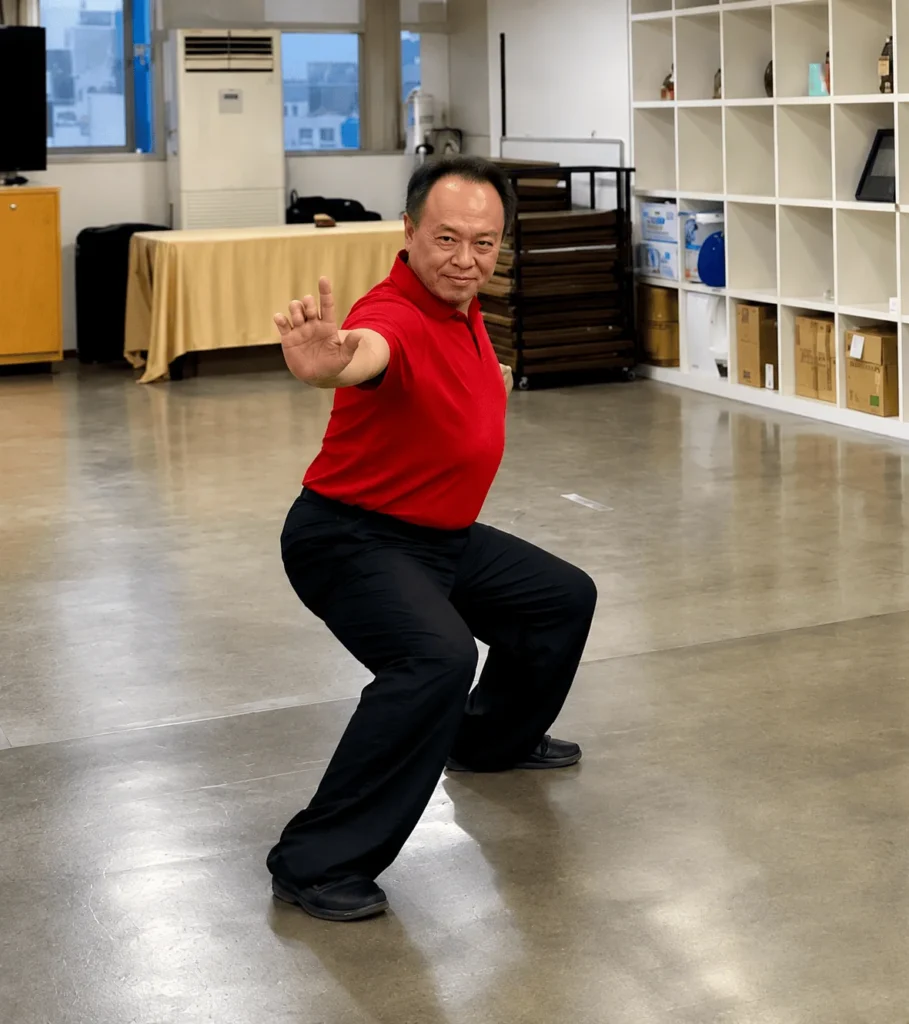
The more you force, the more tension arises.
The more you resist, the more energy gets stuck.
But when you soften—truly soften—
you begin to move like water.
This is the Tao in motion.
6. Ping Shuai Gong
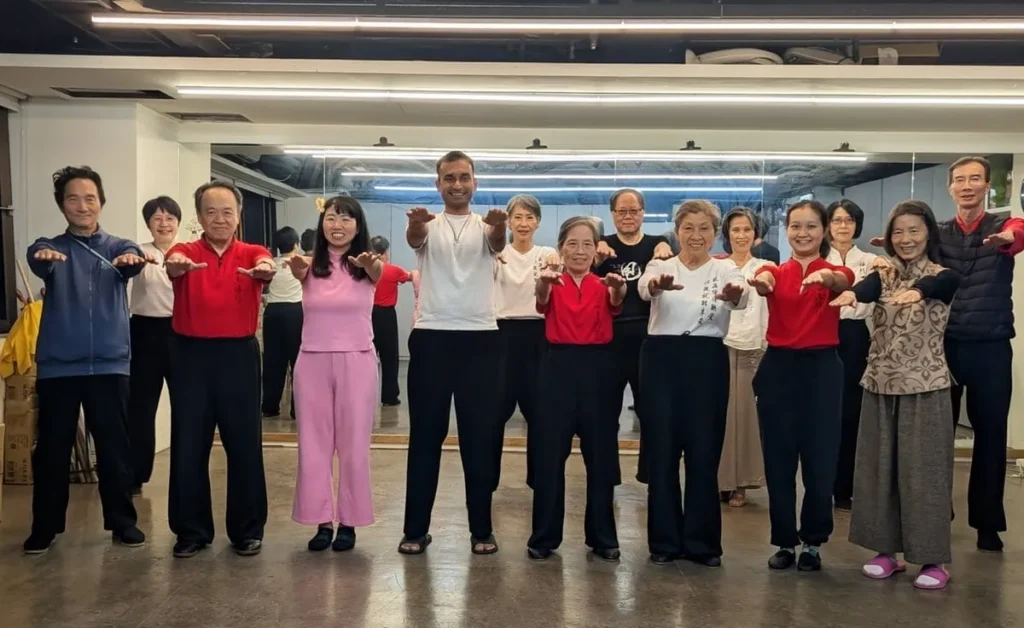
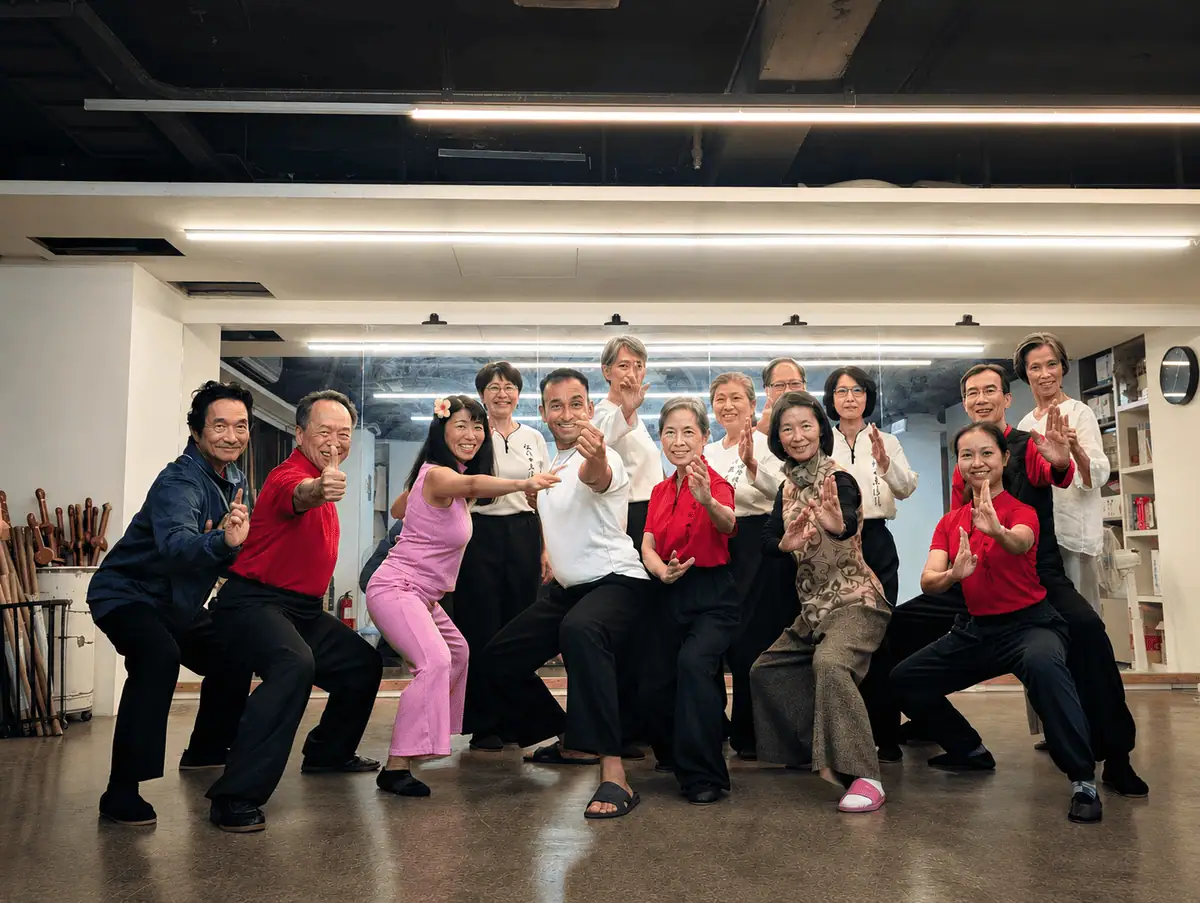
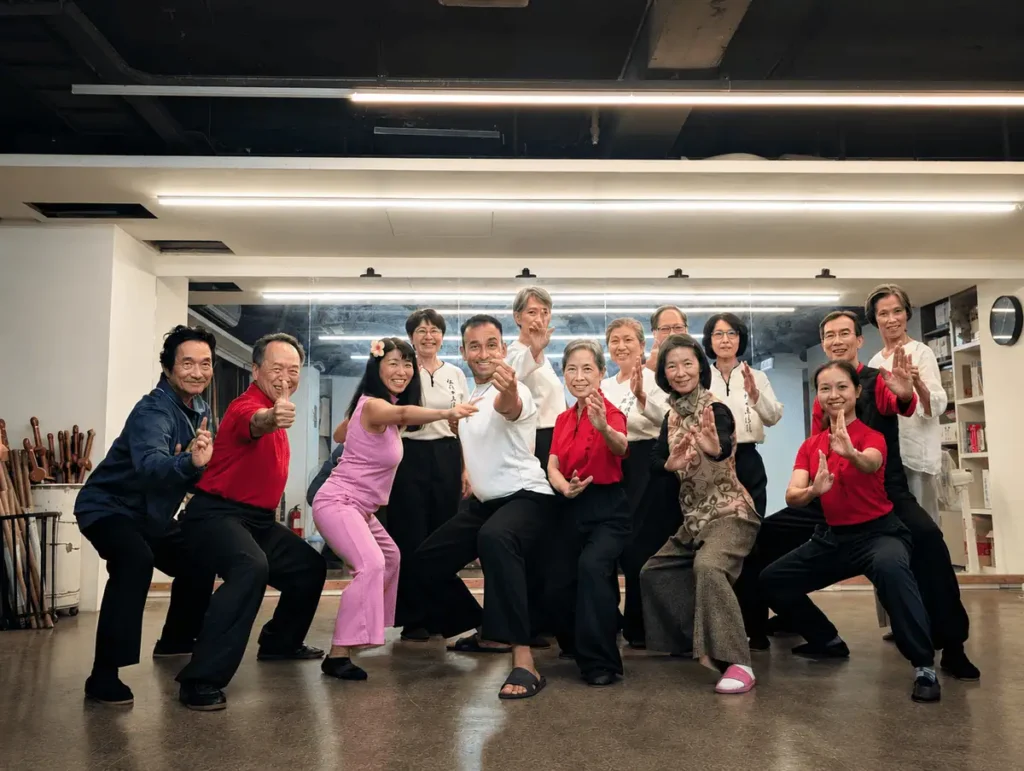
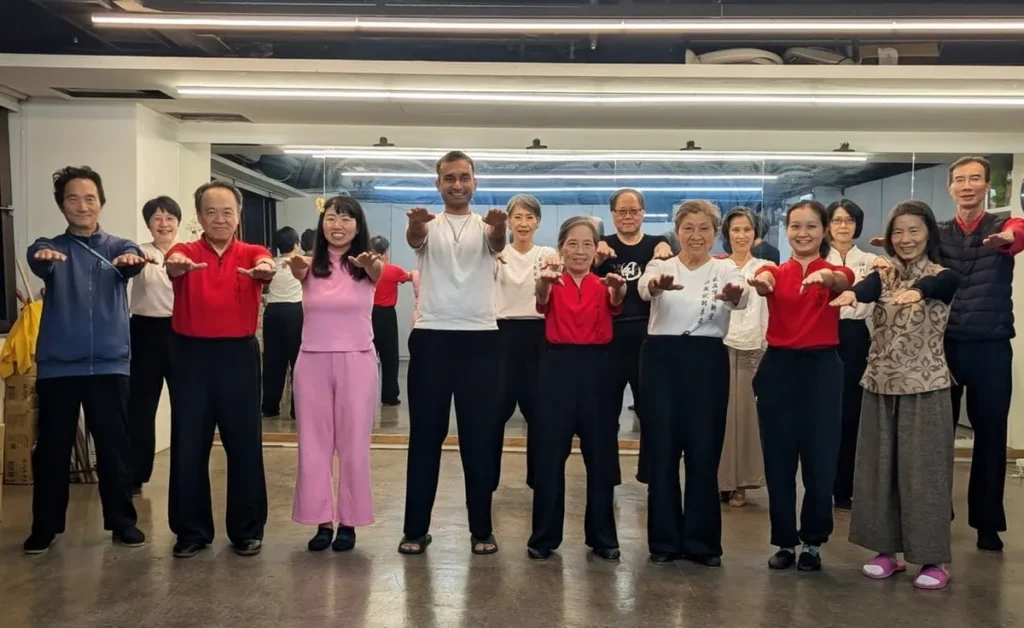
Over those two days of meeting Ms Snow and Meimen community, we were taught Pingshuai.
Pingshuai (平甩) is a a simple, repetitive Qigong (氣功) movement that Master Lee Feng San created from observing how nature breathes.
Ping means balance and stability in Chinese. Shuai means to let go or gently swing away. Gong means a skill developed through practice.
Together, Ping Shuai Gong 平甩功 is the practice of releasing and finding balance within the body and mind. Through gentle, rhythmic movements, Ping Shuai Gong becomes a moving meditation.
Ping shuai gong benefits helps improve circulation, ground the body’s energy, calm the mind, and bring a greater sense of presence and well-being.
No complexity. No barrier.
Just rhythm. Presence. flow.
One of the teachers, Mr. David, shared that before practicing Pingshuai, he had faced serious illness.
Through consistent practice, he supported his body’s healing.
Now, he practices daily—40 minutes, three times a day.
Not because it’s complicated.
But because it’s consistent.
The Tao often reveals itself through simplicity.
It’s not about doing more.
It’s about going deeper into what is already there.
To learn Pingshuai Qigong 李鳳山 平甩功 from Meimen, you can learn here in English or here in Chinese.
When asked why he decided to teach Ping Shuai Gong to the world, and not a more traditional Qigong move, Master Lee’s answer is simple: it is a practice for everyone from young children to those over one hundred years old— making its benefits available to almost anyone.
We practice Ping Shuai Gong several times a week, alongside our daily practices of meditation, Qigong, Indian and Chinese tea arts, Yoga, Hula, Capoeira and Nia. It has become a peaceful part of our holistic wellness.
7. Serving in Every Part of Life
Mr. David (a different teacher) shared how he views his life:
Divided into four parts—family, parents, work, and volunteering.
And in each part, he serves.
Not just in action—but in presence.
That shifted something in me.
Service is not something you do occasionally.
It’s a way of being. A way of living.
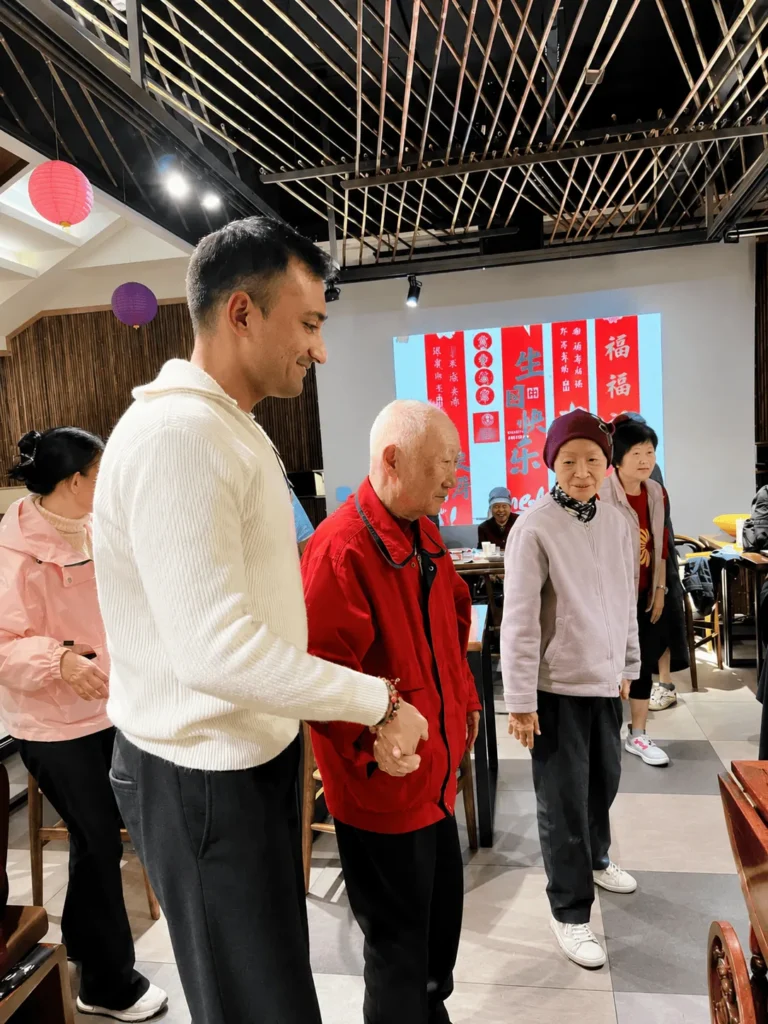
The Tao expresses itself through how you show up—
In every moment, service is in every role of our lives.
8. Every Connection we make has Value
Master Lee often teaches that every connection we make has value.
Ms Snow says this beautifully “When people meet with sincerity, support one another’s growth, and live with a clear sense of purpose, those relationships can create a positive impact that lasts for generations.”
We are very grateful for this sacred connection with Master Lee Feng San, Ms Snow, Mr David, and the Meimen foundation community.
When precious moments like this happens, we are disciplined to reflect over months to let the learnings truly seep in, reveal the deeper mystery, and embody the energy into our lives.
Stay tuned for our next article on how Meimen inspired us to deepen our tea arts and philosophy through Cha Dao, and the way of tea!